Chikorita Pokédex Entry & Stats
Leaf Pokémon · Gen II (Johto) ·grass type
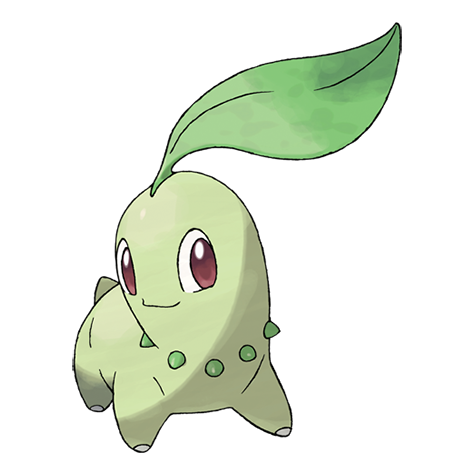
“A sweet aroma gently wafts from the leaf on its head. It is docile and loves to soak up the sun's rays.”
Base Stats
More grass Type Pokémon


Browse the complete list on the grass type Pokémon page.
📢 Advertisement
Ad space — configure AdSense to enable
About Chikorita
Chikorita is a leaf pokémon introduced in Generation 2 (Johto region). It is National Pokédex number 152 and has the grass type. With a base stat total of 318, Chikorita has balanced stats suitable for various roles in casual play. The leaf pokémon measures 0.9 m tall and weighs 6.4 kg, placing it in a specific ecological niche within the Johto region.
Type Effectiveness and Battle Strategy
As a grass type Pokémon, Chikorita has specific strengths and weaknesses that determine its effectiveness in battle. Understanding type matchups is essential for getting the most out of Chikorita in both casual playthroughs and competitive battles. Grass type moves deal increased damage to certain types while being resisted by others. To master the full type effectiveness chart and plan your battles, check our comprehensive Type Chart page which shows all 18 type interactions in an easy to read matrix.
Abilities and How to Use Them
Chikorita can have the following abilities: overgrow, leaf guard (Hidden Ability). Each ability alters how Chikorita performs in battle, and choosing the right one can be the difference between winning and losing a close match. Hidden abilities are typically rarer and often more powerful than the standard ones, making them highly sought after by trainers who want to maximize their Pokémon potential. Use our Team Builder tool to find teammates that synergize well with Chikorita ability and typing.
Base Stats Analysis
The base stat total of 318 is distributed across six categories: HP, Attack, Defense, Special Attack, Special Defense, and Speed. Chikorita highest base stat is special defense with a value of 65, which is decent but not exceptional. The average per stat is 53, which gives a quick overview of the overall power level. Trainers who want to optimize Chikorita for competitive play should focus on EV training and movesets that complement its strongest stats.
Where to Find Chikorita
Chikorita was first introduced in the Gen II games set in the Johto region. In the original games, Chikorita could be found in specific locations such as grass patches, caves, or water routes depending on its habitat. It is one of the common Pokémon that trainers can catch during their journey through Johto. The capture rate of 45 out of 255 means you may need to use stronger Poké Balls or status effects to increase your chances. Use our Pokémon Search tool to look up more details about where to find specific Pokémon.
Shiny Form and Collectibility
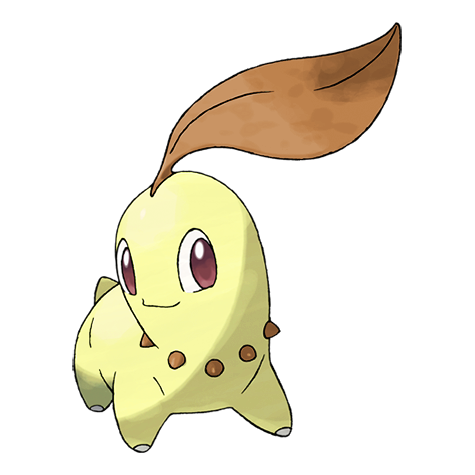
Like every Pokémon, Chikorita has a shiny form with alternate coloring that is extremely rare to encounter in the wild. The shiny version of Chikorita is shown above for reference. Shiny hunting has become a popular activity in the Pokémon community, with players spending hours using methods like the Masuda Method, chain fishing, or SOS battles to increase their odds of finding a shiny Chikorita. If you are interested in seeing all shiny forms, our Shiny Pokémon Checker lets you browse every shiny variant across all nine generations in one place.
Using Chikorita in Nuzlocke Challenges
Nuzlocke challenges are a popular way to add difficulty to Pokémon games by enforcing rules like only catching the first Pokémon encountered in each route and releasing any Pokémon that faints. Chikorita can be a useful team member in Nuzlocke runs, especially in the early to mid game, though its effectiveness depends heavily on the moves it learns and the matchups it faces. If you are planning a Nuzlocke run and want to randomize your encounters, our Pokémon Randomizer tool supports advanced filtering by generation, type, and legendary status.
Trivia and Fun Facts
Chikorita is Pokémon number 152 in the National Pokédex, which was introduced in Generation 2 Johto region. The leaf pokémon has appeared in multiple Pokémon games, the animated series, trading cards, and merchandise. Its design draws inspiration from real world animals, mythology, or concepts that reflect the region it comes from. Fans of the franchise often debate the best designs, strongest battle strategies, and most memorable appearances of each Pokémon across the various media.
Related Pokémon and Evolution
Chikorita may be part of an evolution chain, meaning it can evolve into or from another Pokémon when certain conditions are met. Evolution can occur through leveling up, using evolution stones, trading, friendship, or special location based methods. To explore the full evolution tree and discover related Pokémon, browse our complete Pokédex with all 1,025 Pokémon across all nine generations. You can also use the Pokémon Comparison Tool to compare Chikorita side by side with any other Pokémon to see which one has better stats, typing, or abilities for your specific needs.
Moves and Movepool
Chikorita can learn a variety of moves through leveling up, Technical Machines (TMs), Hidden Machines (HMs), breeding, and move tutors. The movepool of a Pokémon determines its versatility in battle, as a wider movepool allows it to handle more situations and counter more opponents. Grass type moves will receive a Same Type Attack Bonus (STAB) of 1.5x damage when used by Chikorita, making them the primary source of damage output. Status moves like Thunder Wave, Toxic, and Sleep Powder can also be valuable for controlling the pace of battle. To browse all 920+ moves available in the franchise and see which Pokémon can learn each one, visit our moves database.
Competitive Viability
In the competitive Pokémon scene, Chikorita is considered a lower tier Pokémon that is rarely used in serious competitive play. However, in the hands of a skilled trainer, even lower tier Pokémon can surprise opponents grass type attacker. Competitive battling involves understanding not just individual Pokémon strength but also team synergy, item selection, ability interactions, and move prediction. Many competitive players use tools like Pokémon Showdown to test their teams before committing to official tournaments.
In the Anime and Trading Card Game
Chikorita has appeared in the Pokémon animated series and the Pokémon Trading Card Game (TCG), expanding its presence beyond the video games. The anime often features Chikorita in episodes that highlight its personality, abilities, and relationship with trainers. In the TCG, Chikorita has been printed on multiple cards with different attacks, HP values, and rarities, making some versions highly sought after by collectors. The cross media presence of Pokémon like Chikorita is a key reason the franchise has remained popular for over 25 years, with each new generation introducing fresh Pokémon while maintaining the classics that fans love.
Tips for Catching and Training
If you are trying to catch Chikorita in the games, there are a few tips that can improve your chances. First, lower its HP to the red zone using moves like False Swipe, which will always leave the target with at least 1 HP. Second, inflict a status condition like Sleep or Paralysis, which significantly increases the catch rate. Third, use the appropriate Poké Ball for the situation: Ultra Balls have a higher catch rate than standard Poké Balls, Dusk Balls work better in caves and at night, and Quick Balls are effective on the first turn of battle. Once you have caught Chikorita, you can train it by battling wild Pokémon to gain Experience Points (EXP) and level up. EV training, which involves battling specific Pokémon to boost particular stats, is essential for competitive play. The leaf pokémon can also be taught new moves via TMs, move tutors, and breeding.
Fun Facts and Trivia
Here are some interesting facts about Chikorita: it is Pokémon number 152 in the National Pokédex, introduced in Generation 2. Its design was created by the team at Game Freak, the studio behind the mainline Pokémon games, and is based on real world animals, mythological creatures, or concepts that reflect the region it comes from. The name Chikorita is a portmanteau or reference that often relates to its appearance, type, or behavior. Pokémon names vary across different languages, with each localization team adapting the name to fit the cultural context while maintaining the spirit of the original. The leaf pokémon has been featured in various Pokémon media including the games, anime, manga, and merchandise, contributing to its recognition among fans worldwide.
Related Tools
More Pokémon to Explore
Discover other Pokémon from the same generation: